Can You Rebuild Cartilage in Your Joints? The Honest Answer
Can you actually rebuild cartilage in your joints?
Not in the way most ads imply. Adult joint cartilage repairs itself very poorly, and no supplement has been shown to regrow it. What you can realistically do is protect the cartilage you still have and ease discomfort through weight management, muscle strength, sensible movement and good nutrition.
- Adult hyaline cartilage has no blood supply, so its natural repair capacity is limited.
- Supplements can supply matrix building blocks and ease comfort, but do not regrow cartilage on their own.
- Weight, muscle strength, low-impact activity and nutrition do the most to protect existing cartilage.

Why this question is so common — and so misunderstood
“Rebuild your cartilage” is one of the most repeated promises in the joint-supplement aisle. It is an appealing idea: if worn cartilage is the problem, surely the fix is to grow it back. The trouble is that the biology of cartilage does not cooperate with that story, and a lot of marketing quietly skips over why. This article is the reality check — what is genuinely possible, what a capsule can and cannot do, and where you should put your effort instead.
None of this is meant to be discouraging. There is a great deal you can do for painful, stiff joints. It is just that the highest-value moves are usually not the ones being advertised.
What cartilage actually is
The smooth, glassy tissue capping the ends of your bones is called articular or hyaline cartilage. It lets bones glide over each other with almost no friction and spreads load across the joint. It is made mostly of water, held in a scaffold of collagen and large sugar-protein molecules (proteoglycans, which include chondroitin) produced by a sparse population of cells called chondrocytes.
Here is the crucial detail that changes everything: mature articular cartilage has no direct blood supply, no nerves and no lymphatic drainage. It is fed slowly by joint fluid that gets squeezed in and out as you move. Most tissues repair themselves because blood delivers repair cells and nutrients to an injury. Cartilage has almost none of that machinery. That is exactly why a cut on your skin heals in days, while a cartilage defect can sit there for years.
The honest answer: can it grow back?
Only marginally, and rarely in a way that restores the original tissue. Adult articular cartilage has a very limited capacity to heal itself. When damage is small and shallow, the body sometimes patches it — but usually with fibrocartilage, a tougher, more fibrous scar tissue rather than the smooth hyaline cartilage that was lost. Fibrocartilage is better than a bare defect, yet it does not have the same low-friction, load-spreading properties, and it tends to wear out faster.
Larger areas of loss, and the diffuse thinning that comes with age and osteoarthritis, generally do not regrow on their own. There are narrow exceptions — children and adolescents have more active cartilage biology, and certain deep injuries that reach the underlying bone can trigger a limited repair response — but for the typical adult reading this, spontaneous regrowth of worn joint cartilage is not something to count on.
The realistic goal is not to regrow cartilage but to protect what you still have, slow further wear and keep the joint comfortable and functional. That is an achievable target, and the evidence backs it.
Where supplements actually fit
This is where a lot of confusion lives, so let us be precise. Ingredients such as glucosamine, chondroitin, collagen and hyaluronic acid are real components of cartilage and joint fluid. Taking them supplies the body with some of the same raw materials the cartilage matrix is built from. In several trials, glucosamine and chondroitin have produced small, gradual improvements in joint comfort for some people, and collagen peptides have shown modest benefits in a handful of studies. Curcumin and boswellia, the anti-inflammatory botanicals, can help with the inflammation side of joint discomfort.
But notice what that evidence describes: symptom support and possibly slowing the process — not measurable regrowth of cartilage on a scan. There is no strong human evidence that any oral supplement rebuilds lost cartilage. Supplying building blocks is necessary but not sufficient; a pile of bricks is not a wall. So when a label claims a capsule will “regenerate” or “rebuild” your cartilage, that language runs well ahead of the science. Treat it as a red flag, not a feature.
The reasonable way to think about a joint formula is as comfort and matrix support, taken consistently over weeks, alongside the habits below — not as a repair kit.
What genuinely helps protect cartilage
If regrowth is off the table, protection becomes the whole game — and here the evidence is unusually clear and consistent. None of it is exotic, which is probably why it gets less airtime than a miracle capsule.
1. Manage your weight
Body weight is the single biggest modifiable load on your knees and hips. Every extra kilogram is multiplied several times over through the knee during walking and stair climbing. Losing even a modest amount of weight measurably reduces joint load and, in studies of knee osteoarthritis, reduces pain and improves function. If you do one thing for your cartilage, keeping load down is it.
2. Build the muscle around the joint
Strong muscles act as shock absorbers and stabilisers, taking pressure off the cartilage and keeping the joint tracking properly. Quadriceps strength, for example, is strongly linked to better knee function. Progressive, sensible strength training is one of the most reliably effective interventions for painful joints — often as effective as many passive treatments, and it is free.
3. Keep moving — the right way
Cartilage is fed by joint fluid that circulates only when you move, so a sedentary joint is a poorly nourished joint. Regular, low-impact activity — walking, cycling, swimming, mobility work — nourishes cartilage and maintains range of motion. “Motion is lotion” is a cliche because it is broadly true. The aim is consistent, tolerable loading, not pounding a painful joint into submission.
4. Eat to support the tissue
There is no cartilage superfood, but the basics matter: enough protein for collagen synthesis, adequate vitamin C (a cofactor for making collagen), sufficient vitamin D and calcium for the bone underneath, and an overall dietary pattern that keeps inflammation and body weight in check. A balanced, minimally processed, plants-and-protein diet does more here than any single “joint” nutrient.
5. Protect against injury and do not ignore pain
Joint injuries — especially ligament tears — sharply raise the long-term risk of cartilage wear. Warming up, training movement quality, and addressing pain or instability early all help. Persistent swelling, giving-way or pain that changes your gait deserves a professional assessment, not another month of hoping a supplement sorts it out.
What actually helps vs what is still experimental
| Approach | What it realistically does | Evidence |
|---|---|---|
| Weight management | Lowers joint load, reduces pain | Strong |
| Strength & low-impact exercise | Off-loads and stabilises the joint | Strong |
| Balanced, protein-adequate diet | Supplies matrix building blocks | Supportive |
| Glucosamine / chondroitin / collagen | Possible modest comfort; no proven regrowth | Mixed / modest |
| Microfracture / cartilage repair surgery | Repairs specific defects, often with fibrocartilage | Case-specific |
| Stem cell / PRP injections | Marketed for regeneration; unproven for regrowth | Experimental |
The medical procedures people ask about
Medicine can repair cartilage in some situations — but “repair a defect” is not the same as “regrow a worn joint,” and these are surgical decisions, not shopping choices. Microfracture makes tiny holes in the underlying bone to recruit repair cells, typically producing fibrocartilage. Osteochondral grafts move healthy cartilage-and-bone plugs into a damaged area. Cell-based techniques such as autologous chondrocyte implantation (ACI/MACI) grow a patient's own cartilage cells in a lab and re-implant them. These can help specific, localised injuries in the right candidate, with results that vary by person and technique.
The newer, heavily marketed options — stem-cell injections and platelet-rich plasma (PRP) — remain largely experimental for cartilage regrowth. Some show promise for symptoms, but the claim that they rebuild cartilage is not settled science, and quality varies widely between clinics. If you are considering any of these, the right next step is an orthopaedic specialist who can look at your actual joint, not an online promise.
What this means if you are considering JointReliveX
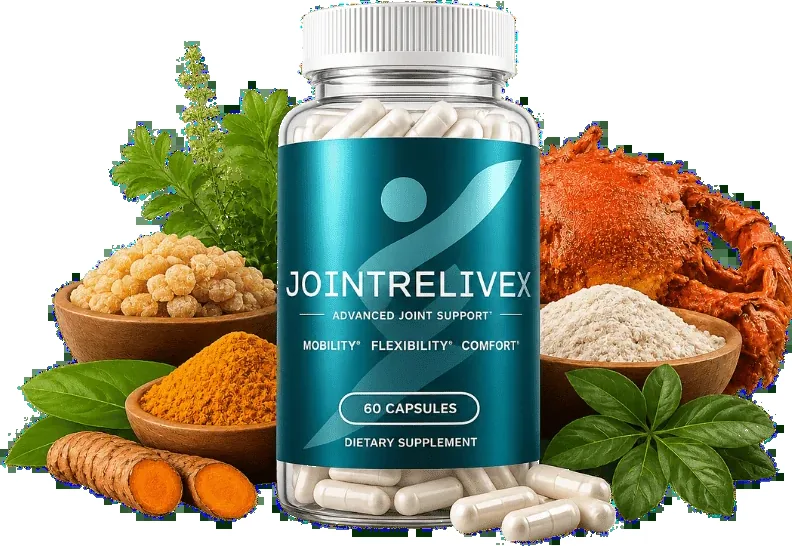
JointReliveX is built around this same honest logic. It pairs cartilage-matrix ingredients (glucosamine and chondroitin) with anti-inflammatory botanicals (turmeric, boswellia and bromelain), which is a sensible way to support the matrix and address everyday joint discomfort over weeks of consistent use. What it does not do — and what we will not claim — is regrow cartilage or replace the fundamentals above. Think of a formula like this as one supporting layer on top of weight, strength, movement and nutrition, not as a substitute for them. And because it is a supplement, it is not intended to diagnose, treat, cure or prevent any disease. If your joint pain is persistent, worsening or affecting how you walk, that is a conversation for a clinician.
References
- NIH NIAMS — Osteoarthritis: causes, symptoms and management
- Arthritis Foundation — Joint protection and weight management
- OARSI — Non-surgical management of knee osteoarthritis
- NIH NCCIH — Glucosamine and chondroitin for osteoarthritis
- PubMed — articular cartilage repair, microfracture and cell-based techniques
Frequently asked questions
Can cartilage grow back naturally?
Only to a very limited degree. Adult articular (hyaline) cartilage has no direct blood supply and few resident repair cells, so large areas do not regrow on their own. The body can sometimes fill small, shallow defects with fibrocartilage, a tougher but lower-quality scar tissue that does not fully match the original. Prevention and protection are far more realistic goals than regrowth.
Do glucosamine or collagen rebuild cartilage?
There is no strong human evidence that any oral supplement regrows lost cartilage. Glucosamine, chondroitin and collagen supply raw materials the cartilage matrix uses, and in some trials they modestly ease joint discomfort over weeks. That is support and symptom relief, not structural rebuilding. Treat any product promising to regenerate or rebuild cartilage from a capsule with real skepticism.
What actually protects joint cartilage?
The best-supported steps are unglamorous: keep a healthy body weight to lower load, build the muscle around the joint, stay active with regular low-impact movement, and eat a balanced, protein-adequate diet. Avoiding joint injuries and not ignoring pain also matter. These habits protect the cartilage you have, which is more valuable than chasing regrowth.
Are there treatments that regenerate cartilage?
Some medical procedures aim to repair cartilage, including microfracture, osteochondral grafts and cell-based techniques such as autologous chondrocyte implantation. Results vary, they are usually reserved for specific injuries rather than general wear, and newer stem-cell and PRP approaches remain largely experimental. These are clinical decisions for an orthopaedic specialist, not something a supplement can replicate.
Related reading
See the full JointReliveX review
Every ingredient, the current sale pricing and the 60-day guarantee — in one place.
Order Now