Boswellia Serrata for Joint Pain: What to Know
By the JointReliveX Research Team · Medically reviewed against the primary literature · Updated 9 August 2026 · about an 8-minute read
How does boswellia serrata help with joint pain?
Boswellia serrata is an anti-inflammatory resin whose boswellic acids, especially AKBA, block the 5-LOX enzyme involved in inflammation. In standardized-extract trials for knee osteoarthritis, some people report less pain and better function within 5 to 7 days, though it supports comfort rather than curing any joint condition.
- Boswellic acids target the 5-LOX inflammatory pathway.
- Look for extracts standardized to boswellic acids or enriched for AKBA.
- Studied doses often deliver roughly 100–250 mg of boswellic acids daily.
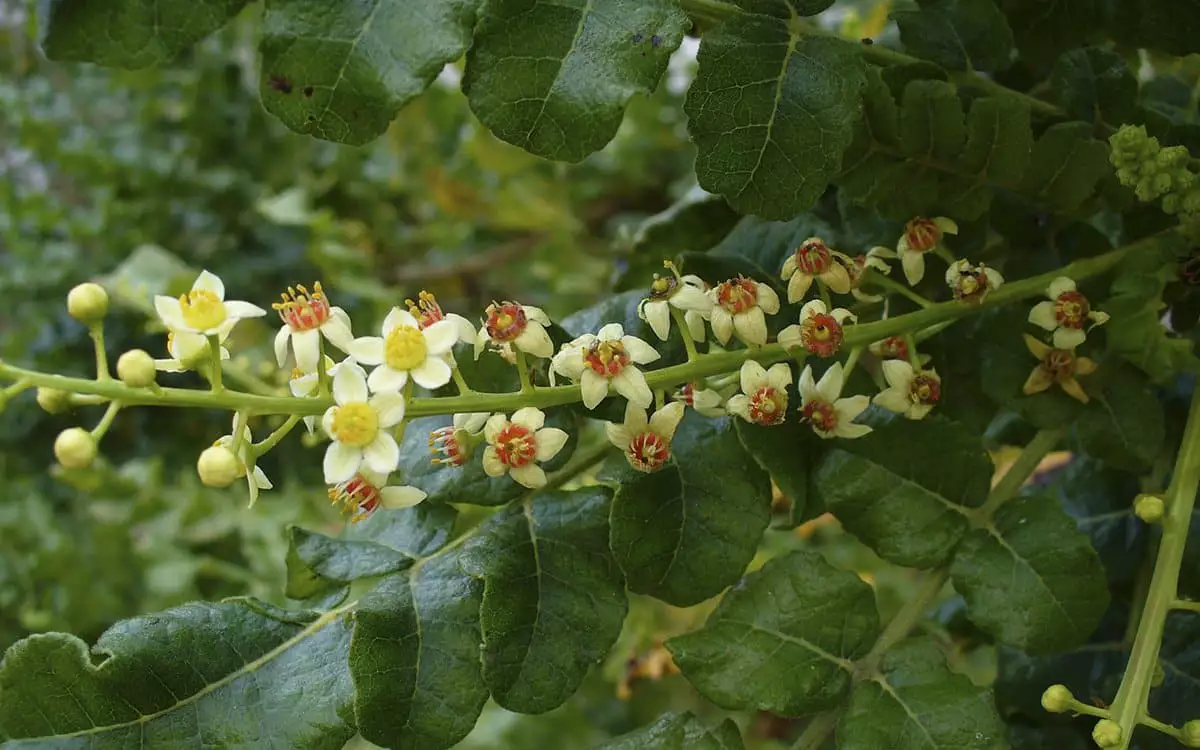
What boswellia serrata actually is
Boswellia serrata is a tree native to the dry hills of India, and the gum resin tapped from its bark has been used in traditional Ayurvedic practice for a very long time. In supplement form, that resin is concentrated into an extract, and the reason it turns up in modern joint formulas is not tradition alone — it is that the resin contains a family of compounds, the boswellic acids, that have a plausible and increasingly studied mechanism against inflammation.
That distinction matters. Plenty of botanicals earn a place on a label because they sound reassuring. Boswellia earns its place because researchers can point to a specific enzyme it appears to act on, and because a modest but real body of clinical trials has tested it in people with joint discomfort. It is not a miracle, and this article will be just as clear about the limits as the promise.
Boswellic acids and the 5-LOX pathway
Everyday joint discomfort has an inflammatory component. When tissue around a joint is irritated, the body produces signalling molecules that amplify swelling, sensitivity and stiffness. One family of those molecules is the leukotrienes, and leukotrienes are manufactured with the help of an enzyme called 5-lipoxygenase, usually shortened to 5-LOX.
Boswellic acids — the active compounds in boswellia resin — are thought to inhibit 5-LOX. The most studied member of the family is a mouthful called acetyl-11-keto-beta-boswellic acid, mercifully abbreviated to AKBA, which is often described as the most potent of the group at this particular job. By turning down 5-LOX activity, boswellic acids are proposed to reduce leukotriene production and, with it, some of the inflammatory signalling around the joint.
This is worth understanding because it explains why boswellia is chemically different from the household cartilage ingredients. Glucosamine and chondroitin are building blocks aimed at the cartilage matrix. Boswellia is not trying to rebuild anything — it is trying to quiet an inflammatory pathway. It also explains why boswellia is frequently paired with curcumin, which acts on a different set of inflammatory signals: the two attack the problem from separate angles.
What the clinical evidence shows
The trial base for boswellia is smaller than the one for curcumin, but it is reasonably consistent in direction. Several randomised, placebo-controlled studies in people with knee osteoarthritis have found that standardized boswellia extracts improved pain scores and physical function over periods ranging from a few weeks to a few months. Reviews that pool these studies tend to conclude that boswellia is among the more promising botanicals for joint symptoms, while also noting that many trials are small and vary in the exact extract used.
One feature that stands out in the boswellia literature is speed. Some trials of standardized extracts report measurable improvements in pain and stiffness within 5 to 7 days — unusually quick for a joint supplement, where most ingredients are measured in weeks. That does not mean everyone feels a change in a week, and it does not make boswellia a painkiller you take as needed. But it does set it apart from the cartilage-matrix ingredients, whose effects, where present, build slowly.
The fair summary: boswellia serrata has a smaller but reasonably consistent evidence base for reducing knee osteoarthritis pain and improving function, and it can act faster than most joint ingredients. It supports comfort; it does not cure the underlying joint condition.
A recurring theme in these studies is standardization. The trials that reported benefits did not use raw powdered resin of unknown strength — they used extracts standardized to a defined percentage of boswellic acids, and several used extracts specifically enriched for AKBA. That is the single most important thing to carry over into how you read a label.
Dosing: read the boswellic acid number, not the resin
Because products differ so much in strength, the milligrams of resin printed in large type are close to meaningless on their own. What matters is how much active boswellic acid the dose actually delivers. Across the research, extracts that provided roughly 100 to 250 mg of boswellic acids per day, often split into two doses, are a reasonable representation of what has been studied. Some AKBA-enriched extracts are used at lower total milligrams because the active fraction is higher.
So when you compare two joint products, do not compare "500 mg boswellia" against "300 mg boswellia" and assume the bigger number wins. A 300 mg extract standardized to a high percentage of boswellic acids can deliver more active compound than a 500 mg extract of weak, unstandardized resin. Look for a standardization statement — a percentage of boswellic acids, or an AKBA figure — on the Supplement Facts panel. If the label is silent on standardization, you cannot know what you are getting.
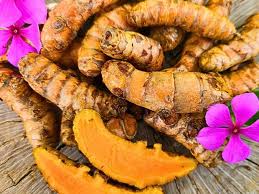
Combining boswellia with turmeric
Boswellia and turmeric are the classic joint pairing for a good reason. Curcumin, the active compound in turmeric, works largely through different inflammatory signalling than the 5-LOX pathway boswellia targets. Combining ingredients that hit separate mechanisms is a sensible formulation idea rather than marketing padding, and a handful of small trials of combined boswellia-plus-curcumin extracts have reported joint benefits, in some cases comparing favourably with a standard anti-inflammatory drug in short studies.
Two honest caveats. First, a combination product is not the same as two separately studied doses stacked together; the amounts of each ingredient in a blend can be lower than the amounts trials used alone. Second, pairing two anti-inflammatory botanicals is a support strategy for everyday comfort, not a substitute for medical care if you have a diagnosed joint condition.
How fast to expect anything, realistically
Boswellia's reputation for relatively quick action is one of its genuine selling points, but expectations still need calibrating. The 5-to-7-day figure comes from group averages in trials, where some participants respond and some do not. A realistic plan is to take a standardized extract consistently and give it a fair trial of 8 to 12 weeks before judging it, while paying attention to function — stairs, getting out of a chair, morning stiffness — not just a pain number. If nothing has shifted after a couple of months of consistent use, it may not be your ingredient.
Safety and who should be cautious
Boswellia is generally well tolerated in studies, with the most commonly reported issues being mild digestive complaints such as nausea or stomach upset. That said, "generally well tolerated" is not the same as "risk-free for everyone." Anyone who is pregnant or nursing, who takes prescription medication, or who has a chronic health condition should talk to a clinician before starting, simply because interactions and individual circumstances vary. As with any anti-inflammatory botanical, it is also reasonable to mention it to your doctor if you are already managing joint problems medically, so your overall plan is coordinated.
And the standing reminder that applies to every ingredient on this site: a supplement is not a treatment. If you have joint pain that is persistent, worsening, or accompanied by significant swelling, warmth or loss of movement, that deserves a proper assessment from a healthcare professional, not a capsule.
Where boswellia fits in JointReliveX
JointReliveX includes boswellia serrata alongside turmeric, bromelain and the cartilage-matrix pair of glucosamine and chondroitin. That places two of its better-evidenced anti-inflammatory ingredients — boswellia and curcumin — together in one formula, which is a reasonable way to cover the inflammatory side of joint discomfort. As always, the honest move is to check the Supplement Facts panel for the boswellic acid standardization and the amount per serving, and to compare that against what the research actually used, rather than taking any single number at face value.
Frequently asked questions
How quickly does boswellia work for joints?
It is one of the faster-acting joint botanicals in the research. Some standardized-extract trials in knee osteoarthritis report reduced pain and stiffness within 5 to 7 days, with further improvement over several weeks. Consistency matters, so give any extract a fair trial of 8 to 12 weeks before deciding.
What boswellia dosage is used for osteoarthritis?
Studies vary, but most use extracts that deliver roughly 100 to 250 mg of boswellic acids per day, often split into two doses. Because products differ in standardization, the boswellic acid content on the label matters far more than the raw milligrams of resin.
What are boswellic acids and how do they work?
Boswellic acids are the active compounds in boswellia resin. The most studied is AKBA, which inhibits 5-LOX, an enzyme that helps produce inflammatory messengers called leukotrienes. By dialing down that pathway, boswellic acids are thought to support a calmer inflammatory response around the joint.
Can boswellia be combined with turmeric?
Yes, and the two are often paired. Boswellia and curcumin act on different inflammatory pathways, so combining them is a common formulation strategy. Some small trials of combined extracts report joint benefits, though pairing them does not replace medical care for a diagnosed joint condition.
References
Related reading
See the full JointReliveX review
Every ingredient, the boswellia standardization, the current sale pricing and the 60-day guarantee — in one place.
Order Now