Quercetin and Methionine in JointReliveX: What the Overlooked Minor Ingredients Actually Do
Sourced from the product label and PubMed-indexed research · Updated 27 September 2026 · about a 10-minute read
The short version
JointReliveX prints 16.7mg of quercetin and 16.7mg of methionine per 2-capsule serving — the two smallest, least-discussed lines on the label. Quercetin has real anti-inflammatory research behind it, but almost all of that research used doses of 45mg to 1,000mg, well above 16.7mg. Methionine has essentially no direct joint-outcome trials at any dose, and 16.7mg is a small fraction of ordinary daily intake. Neither ingredient is the reason to buy or avoid this formula — they are minor, low-dose additions layered onto the much larger glucosamine and boswellia amounts.
- Quercetin: 16.7mg here vs 45–1,000mg in published trials.
- Methionine: 16.7mg here, with no dedicated joint trials at any dose found.
- Both sit far below glucosamine's 1,000mg on the same label.
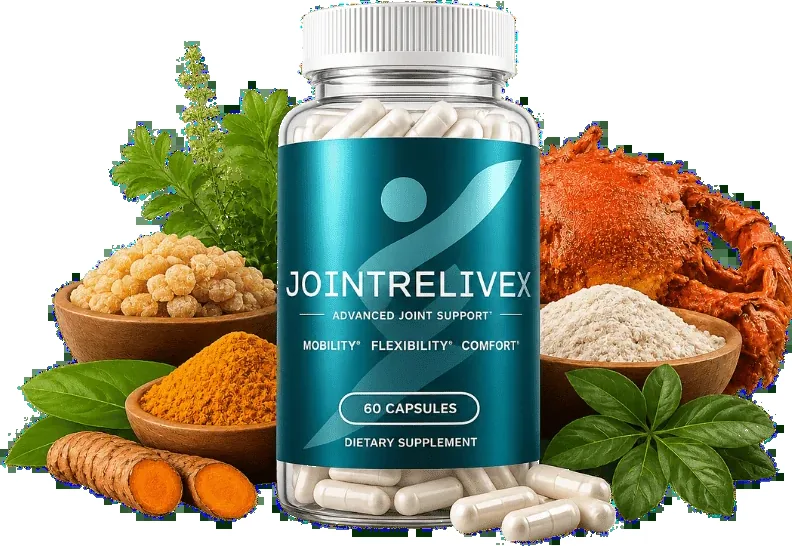
Where these two sit on the JointReliveX label
JointReliveX is sold as eight individually-dosed ingredients per 2-capsule serving, not a proprietary blend: glucosamine sulfate 1,000mg, boswellia extract 133.3mg, chondroitin sulfate 100mg, turmeric root 100mg, and then four ingredients at exactly 16.7mg each — quercetin, MSM (methylsulfonylmethane), bromelain and methionine. No percent Daily Value is printed for any of the eight, and there is no formal Supplement Facts panel image on the sales page, just the ingredient amounts written out in text.
Quercetin is listed as coming from Sophora japonica bud (a flavonoid source also known as the Japanese pagoda tree), and methionine is listed as a plain amino acid with no stated source or form. This article looks specifically at those two 16.7mg lines: what each ingredient actually does according to published research, and how the amount printed here compares with the amounts that research used.
Quercetin: what it is and how it is thought to work
Quercetin is a flavonoid — a plant pigment compound found in onions, apples, berries, capers and many other foods, and sold separately as a supplement, usually as a powder in capsules. Its appeal rests on two overlapping properties: it is an antioxidant, meaning it can help neutralize reactive molecules involved in cellular stress, and it has anti-inflammatory activity in laboratory studies, where it appears to influence some of the signalling pathways involved in inflammation. Neither property is unique to quercetin — many plant flavonoids share a broadly similar profile — but quercetin is one of the more extensively studied members of that family.
For joints specifically, the proposed mechanism is the same anti-inflammatory story used for turmeric and boswellia elsewhere on the JointReliveX label: calming some of the inflammatory signalling associated with joint discomfort, rather than rebuilding cartilage. That is a plausible mechanism on paper. The open question, as with any supplement ingredient, is what the clinical trials actually found, and at what dose.
What the joint-specific research on quercetin shows
There is a small but real body of clinical research testing quercetin in the context of knee osteoarthritis — though almost always as part of a combination product, not alone. Two Japanese randomized, double-blind, placebo-controlled trials, both from the same research group, are the clearest examples. In the first, 40 adults with symptomatic knee osteoarthritis took a supplement combining 1,200mg glucosamine hydrochloride, 60mg chondroitin sulfate and 45mg of quercetin glycosides per day for 16 weeks; the combination group showed significantly better symptom scores than placebo on several measures (Kanzaki et al., 2012, Journal of the Science of Food and Agriculture, PMID 21969261). In the second, a larger 100-person, 16-week trial tested a supplement with 1,200mg glucosamine, 60mg chondroitin, 45mg type II collagen peptides, 90mg of quercetin glycosides, 10mg imidazole peptides and 5µg vitamin D against placebo, and found improvements in knee-extensor strength and walking speed in people with mild-to-severe knee pain at baseline (Kanzaki et al., 2015, Clinical Interventions in Aging, PMID 26604721).
Two things are worth being precise about here. First, both trials tested quercetin glycosides — a specific processed form of quercetin, not necessarily identical to the Sophora japonica bud extract on the JointReliveX label — at 45mg and 90mg per day, which is roughly 2.7 to 5.4 times the 16.7mg on this label. Second, quercetin was never tested alone in either study; it was one ingredient in a multi-component formula alongside glucosamine, chondroitin and other actives, so neither trial can tell you what quercetin itself contributed to the result, only that the combination outperformed placebo. Nobody, as far as this search found, has published a randomized trial testing 16.7mg of quercetin alone against placebo for any joint outcome.
What quercetin research outside of joints shows about dose
Looking at the wider quercetin literature helps put 16.7mg in context, because quercetin has been studied far more heavily outside of joint research — in cardiovascular and immune-function studies — and those trials consistently use much larger amounts. In a placebo-controlled crossover trial in 93 overweight or obese adults with metabolic-syndrome traits, 150mg of quercetin per day for six weeks modestly reduced systolic blood pressure and oxidised LDL cholesterol compared with placebo (Egert et al., 2009, British Journal of Nutrition, PMID 19402938). At the higher end, a study of 40 trained cyclists tested 1,000mg of quercetin per day for three weeks around a period of intensive exercise, and found it reduced the incidence of upper respiratory infections afterward, though it did not change several other immune markers measured (Nieman et al., 2007, Medicine & Science in Sports & Exercise, PMID 17805089).
So across the quercetin literature that PubMed indexes, doses cluster from roughly 45mg (in combination joint formulas) up to 1,000mg (in single-ingredient trials) — and 16.7mg sits below essentially all of it. That does not mean 16.7mg of quercetin does nothing; flavonoids are active at various concentrations, and a small amount taken daily alongside food-derived quercetin is not nothing. It does mean that no published trial has tested this specific amount, alone, for any joint or health outcome, so any effect from the quercetin line on this label is not something the clinical literature has directly measured.
Methionine: what it is and why it is on a joint-supplement label
Methionine is an essential amino acid — the body cannot make it and must get it from protein in the diet (meat, fish, eggs, dairy, nuts and, in smaller amounts, grains and legumes). It plays a genuinely important structural role: methionine is one of the "sulfur amino acids," alongside cysteine, and sulfur from these amino acids is used throughout the body, including in the connective tissue — cartilage, tendons and ligaments — that makes up joints. That is the biological logic for including it on a joint-support label, and it is a real one: sulfur genuinely matters for connective tissue chemistry.
The gap between that general biological role and a specific benefit from swallowing 16.7mg of extra methionine is where the evidence runs out. Unlike MSM (methylsulfonylmethane, also a sulfur-containing compound and also on this label at 16.7mg), which has several small randomized trials in knee osteoarthritis behind it, this search did not find a single published human trial testing oral methionine itself, at any dose, for joint pain, stiffness or osteoarthritis outcomes. That is a meaningfully different evidentiary position from the other seven ingredients on the JointReliveX panel, several of which at least have some joint-specific trial data, however limited.
Methionine, SAMe, and an important distinction
The one place sulfur-amino-acid chemistry does show up in real osteoarthritis trials is S-adenosylmethionine (SAMe) — a compound the body makes from methionine, not methionine itself. A systematic review of complementary therapies for osteoarthritis specifically flagged SAMe, alongside capsaicin gel, as having consistent supporting evidence, with boswellia (Indian frankincense) and MSM noted as having "promising" but less consistent evidence — and quercetin and methionine were not part of that positive list at all (De Silva et al., 2011, Rheumatology, PMID 21169345). In a 16-week, double-blind crossover trial in 56 adults with knee osteoarthritis, 1,200mg of SAMe per day performed comparably to 200mg of the prescription NSAID celecoxib, though SAMe took longer to start working (Najm et al., 2004, BMC Musculoskeletal Disorders, PMID 15102339).
It would be a mistake to read that SAMe evidence as evidence for the methionine on the JointReliveX label. SAMe is a different molecule, synthesized inside the body through several enzymatic steps from methionine, and the trials above dosed SAMe itself at 1,200mg — about 72 times the 16.7mg of plain methionine on this label. There is no published research showing that taking 16.7mg of methionine meaningfully raises SAMe levels or produces SAMe-like effects, and it would be a real stretch of the evidence to imply otherwise. The honest summary is: methionine is a real, essential nutrient with a genuine biochemical connection to connective tissue and to SAMe production, but the specific claim "methionine helps your joints" has not been tested directly, and the compound that has been tested (SAMe) is not the same thing at a much higher dose.
Putting 16.7mg of methionine in daily-intake context
Because methionine is an essential nutrient, its ordinary dietary requirement gives a useful yardstick, even though it comes from nutrition research rather than a joint trial. Using the indicator amino acid oxidation method, a 2023 study in adults aged 60 and over found a mean daily requirement for total sulfur amino acids (methionine plus cysteine combined, without dietary cysteine present) of 26.2mg per kilogram of body weight in men and 17.1mg per kilogram in women (Paoletti et al., 2023, American Journal of Clinical Nutrition, PMID 37356549). For a 70kg (154lb) adult, that works out to roughly 1,200–1,830mg of total sulfur amino acids needed per day just to meet baseline nutritional requirements — not as a therapeutic dose, simply to avoid deficiency.
That figure covers methionine and cysteine together, not methionine alone, and it is a baseline requirement figure, not a clinical trial dose, so it cannot be used to predict any joint benefit. But as a sense check, it shows that 16.7mg of methionine is a very small number next to what the body needs from sulfur amino acids each day from food alone — on the order of a few percent of one day's basic requirement, from a food source most people already meet through ordinary protein intake. That context is useful for calibrating expectations: this ingredient reads more like a token, formulation-level addition than a dose chosen to move any measurable outcome.
Why these two are both exactly 16.7mg
One pattern worth naming plainly: quercetin, MSM, bromelain and methionine are all printed at precisely the same amount, 16.7mg, on the JointReliveX label. The sales page offers no explanation for why these four, specifically, share an identical figure, and it has the visual signature of an even split of remaining capsule space across four "supporting" ingredients, rather than four doses independently chosen to match published research for each one. That is an observation about how the label reads, not a confirmed fact about how the product was formulated — JointReliveX has not published a rationale for the amount, and none was found in the sources reviewed for this article.
The bottom line on quercetin and methionine
Neither ingredient is the reason JointReliveX's formula would or wouldn't work for a given person, and neither is dangerous at these amounts — 16.7mg of a dietary flavonoid and 16.7mg of an essential amino acid are both, on their own, unremarkable quantities with no notable safety signal at this level. But it would overstate the evidence to describe either one, at 16.7mg, as "clinically studied" for joints in the way that phrase is usually meant. Quercetin has joint-adjacent trial data, but at 2.7 to 5.4 times this dose and always in combination with other actives. Methionine has essentially no direct joint trial data at any dose, and the related compound that does have trial data, SAMe, is dosed far higher and is chemically distinct. If you are evaluating JointReliveX, the ingredients worth weighing most heavily are the much larger glucosamine, boswellia, chondroitin and turmeric amounts — not these two smallest lines on the panel.
Frequently asked questions
How much quercetin and methionine does JointReliveX contain?
JointReliveX lists 16.7mg of quercetin (from Sophora japonica bud) and 16.7mg of methionine per 2-capsule serving, according to the ingredient amounts printed on the product's sales page. No percent Daily Value is printed for either ingredient.
Is 16.7mg of quercetin an effective dose?
It is well below the amounts used in most published quercetin trials. Joint-specific combination trials have used 45 to 90mg of quercetin glycosides per day, and general quercetin research has commonly used 150 to 1,000mg per day. There is no published human trial testing 16.7mg of quercetin alone for any outcome.
Does methionine help joint pain?
There is essentially no direct clinical trial evidence testing oral methionine itself for joint pain or osteoarthritis outcomes. A related compound the body makes from methionine, S-adenosylmethionine (SAMe), has been studied for osteoarthritis at doses around 1,200mg per day — many times higher than, and chemically distinct from, the 16.7mg of methionine on the JointReliveX label.
Why are quercetin and methionine both exactly 16.7mg?
JointReliveX prints four ingredients — quercetin, MSM, bromelain and methionine — at exactly 16.7mg each. The sales page does not explain the amount, and it looks consistent with an even split of leftover capsule space rather than doses chosen to match any specific published trial.
References
- Kanzaki N, et al. Effect of a dietary supplement containing glucosamine hydrochloride, chondroitin sulfate and quercetin glycosides on symptomatic knee osteoarthritis. J Sci Food Agric. 2012. PMID 21969261
- Kanzaki N, et al. Glucosamine-containing supplement improves locomotor functions in subjects with knee pain. Clin Interv Aging. 2015. PMID 26604721
- Egert S, et al. Quercetin reduces systolic blood pressure and plasma oxidised LDL in overweight subjects. Br J Nutr. 2009. PMID 19402938
- Nieman DC, et al. Quercetin reduces illness but not immune perturbations after intensive exercise. Med Sci Sports Exerc. 2007. PMID 17805089
- De Silva V, et al. Evidence for the efficacy of complementary and alternative medicines in the management of osteoarthritis. Rheumatology. 2011. PMID 21169345
- Najm WI, et al. S-adenosyl methionine (SAMe) versus celecoxib for osteoarthritis symptoms. BMC Musculoskelet Disord. 2004. PMID 15102339
- Paoletti A, et al. The dietary requirement for total sulfur amino acids in adults aged ≥60 years. Am J Clin Nutr. 2023. PMID 37356549
Related reading
See the full JointReliveX ingredient breakdown
All eight ingredients, their printed amounts, and the current pricing — in one place.
Order JointReliveX