How to Read the JointReliveX Supplement Facts: What's Printed and What Isn't
Sourced from the product label and PubMed-indexed research · Updated 27 September 2026 · about an 11-minute read
The short version
JointReliveX's sales page prints eight ingredients with an individual milligram amount for each, which is more transparent than a single "proprietary blend" number. But several things a careful label-reader would look for are missing: no percent Daily Value anywhere, no boswellic-acid standardization for the boswellia, no curcuminoid standardization for the turmeric, no activity units for the bromelain, no formal servings-per-container line, and no named "other ingredients." None of that means the product is unsafe — but it does mean several of the numbers you would need to judge extract strength are simply not there.
- What's printed: 8 ingredients, each with its own mg amount.
- What's missing: %DV, 3 standardization figures, a servings line, and the capsule's "other ingredients."
- The fix: know what to look for, and treat blanks as unknowns, not zeros.
Why label-reading is its own skill
Most people evaluate a supplement by asking "does it work," and go looking for reviews or testimonials. That is understandable, but it skips a step that takes less time and tells you more: reading the ingredient panel itself, line by line, and noticing not just what is printed but what is left blank. A Supplement Facts label is a legal document with specific required fields, and manufacturers have real latitude in what they choose to include beyond the minimum. Two products can both be "fully labeled" and legally compliant while one gives you far more information than the other. This article walks through the JointReliveX ingredient panel as a worked example — not because its label is unusual, but because it is a clean illustration of a pattern that shows up across the supplement industry.
What JointReliveX gets right: individual ingredient dosing
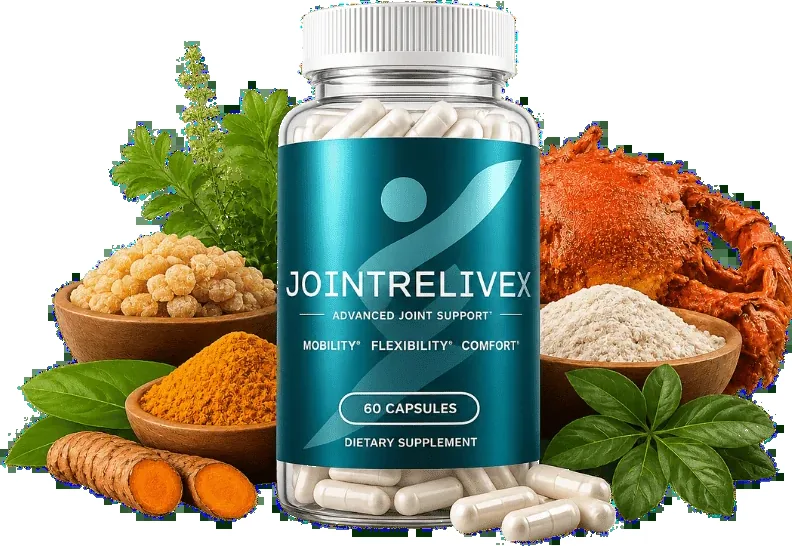
Start with the good part. JointReliveX's sales page lists eight ingredients for its 2-capsule serving, each with its own stated amount: glucosamine sulfate 1,000mg, boswellia extract 133.3mg, chondroitin sulfate 100mg, turmeric root 100mg, quercetin 16.7mg, MSM 16.7mg, bromelain 16.7mg and methionine 16.7mg. That is a meaningfully different presentation from a "proprietary blend," which many competing joint formulas use — a blend lists a combined total weight for several ingredients together, with no way to know how much of the total is any single one. When a label says "Joint Blend: 1,200mg" and lists five ingredients underneath, you genuinely cannot tell whether the first ingredient is 1,000mg and the last four share 200mg between them, or something else entirely. Naming each ingredient's own amount, as this label does, closes that particular gap and lets you actually compare the product against published research amounts, ingredient by ingredient.
Gap #1: no percent Daily Value anywhere
The next thing a careful reader checks is percent Daily Value (%DV) — the figure that tells you how a printed amount relates to an established reference intake. On the JointReliveX panel, no %DV is printed for any of the eight ingredients. For several of them (boswellia, quercetin, MSM, bromelain), that is not unusual, because the U.S. has not established a Daily Value for those compounds, so there is nothing to calculate a percentage against. For methionine, an essential amino acid, and to some extent for glucosamine and chondroitin, %DV figures are less commonly printed on joint-supplement labels generally, even though a reference intake exists in some nutrition contexts. The practical takeaway: without %DV, a printed milligram number tells you the raw amount and nothing else. You have to bring your own reference point — from a published trial, a nutrition reference, or both — to know whether that number is meaningfully large or small. That is exactly the exercise the companion article on this site, comparing each JointReliveX amount to trial doses, works through in detail.
Gap #2: no boswellic-acid standardization
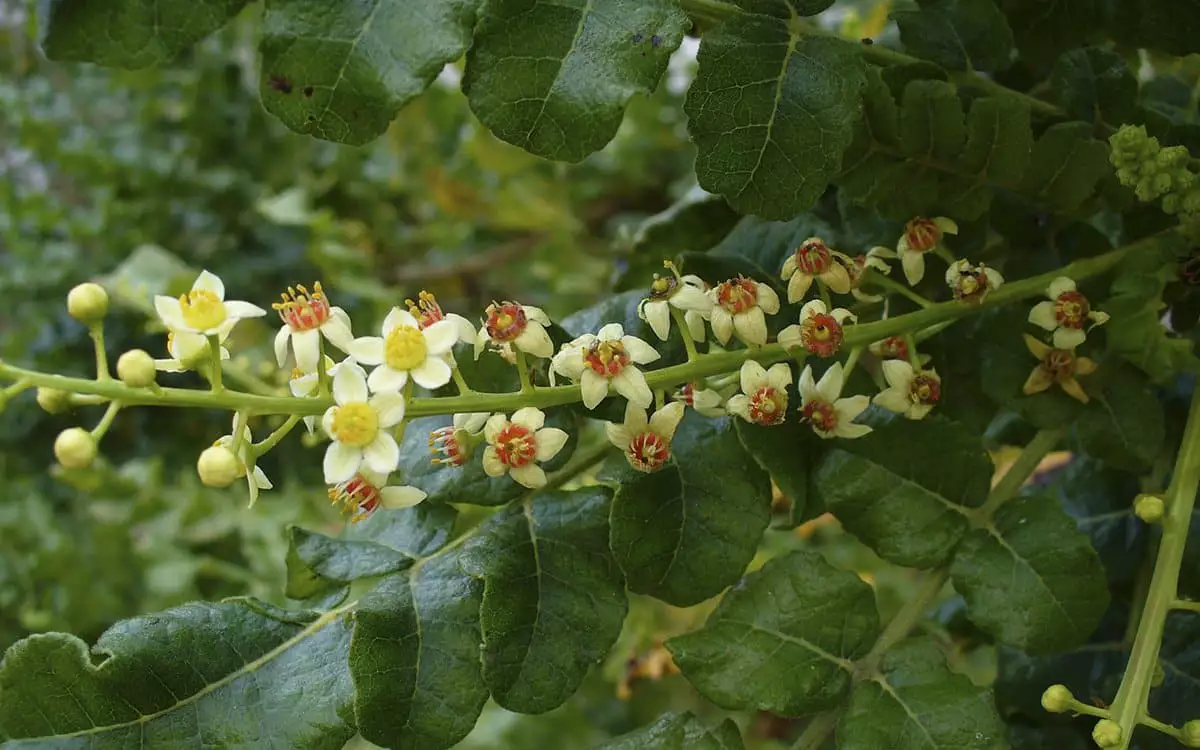
Boswellia serrata resin (Indian frankincense) is valued for a family of compounds called boswellic acids, and particularly for one of them, AKBA (acetyl-11-keto-beta-boswellic acid), which is considered the most potent anti-inflammatory constituent. A serious boswellia extract label states what percentage of the extract is boswellic acids, or specifically AKBA — commonly somewhere in a 20 to 65 percent range on commercial extracts, because that percentage is what makes an "extract" meaningfully different from ground resin powder. The JointReliveX label states "Boswellia Extract 133.3mg" and separately "Boswellia serrata Resin" as the source, but prints no percentage. That means 133.3mg tells you the weight of the extract, not its potency — two boswellia extracts at 133.3mg could contain very different amounts of active boswellic acids depending on how concentrated each one is. Published boswellia trials in knee osteoarthritis, discussed in more detail in the companion dose-comparison article, have generally used standardized extracts with a stated boswellic-acid percentage; without that figure here, the 133.3mg number cannot be directly compared to those trials.
Gap #3: no curcuminoid standardization for turmeric
The same issue applies to the "Turmeric Root 100mg (Curcuma longa Root)" line, arguably more so. Turmeric root itself typically contains only a few percent curcuminoids (the compounds, including curcumin, responsible for most of turmeric's studied anti-inflammatory activity) by weight. A standardized curcumin extract, by contrast, is concentrated to a stated curcuminoid percentage, often 95 percent or higher, specifically so a smaller weight of extract delivers a meaningful curcuminoid dose. JointReliveX's label describes this ingredient as "Turmeric Root," not a curcumin extract, and states no curcuminoid percentage. A 2016 NIH Office of Dietary Supplements review that compared the doses of culinary-spice ingredients on supplement labels with the doses tested in clinical trials found this exact problem is widespread: the amount of a spice-plant ingredient was declared on only about 55 percent of the labels reviewed, and even when an amount was given, distinguishing plain powdered root from a concentrated extract was often difficult from the label alone (Saldanha, Dwyer & Betz, 2016, Advances in Nutrition, PMID 26980817). JointReliveX's label is actually clearer than many in that review, since it does specify "Root" rather than leaving the form ambiguous — but that clarity cuts both ways: it tells you plainly that this is unconcentrated turmeric root, which is a meaningfully different (and much less curcuminoid-dense) ingredient than the standardized curcumin extracts used in most positive knee-osteoarthritis trials.
Gap #4: no bromelain activity units
Bromelain, the pineapple-stem enzyme on this label at 16.7mg, is usually measured two ways on a quality label: by weight (milligrams) and by enzymatic activity, expressed in GDU (gelatin-dissolving units) or MCU (milk-clotting units) per gram. Activity units matter because bromelain's potency can vary meaningfully between preparations of the same weight, depending on how it was extracted and purified — a higher-activity bromelain does more per milligram than a lower-activity one. The JointReliveX label gives only the weight, 16.7mg, with no activity-unit figure. That is a genuine gap: without it, there is no way to know whether this is a standard-potency or high-potency bromelain preparation.
The four standardization gaps, at a glance
- %DV: not printed for any of the 8 ingredients.
- Boswellia: 133.3mg extract, no stated % boswellic acids.
- Turmeric: 100mg root, no stated % curcuminoids (and it is root, not a curcumin extract).
- Bromelain: 16.7mg, no stated GDU/MCU activity units.
Gap #5: no formal servings-per-container line
A standard Supplement Facts panel states "Servings Per Container" as its own line, directly under the serving size. JointReliveX's sales page does not print that line as such. It can be derived: the bottle holds 60 capsules, the suggested use is two capsules daily, and the packages are sold as "30 Day Supply, 2 Bottles," "90 Day Supply, 3 Bottles" and "180 Day Supply, 6 Bottles" — which is consistent with 30 servings per 60-capsule bottle (60 capsules ÷ 2 capsules per serving). That arithmetic is straightforward and almost certainly correct, but it is worth noticing that you, the reader, are doing that division yourself; the page states it through the day-supply language on the pricing tiers rather than as a formal servings-per-container figure on an ingredient panel.
Gap #6: "other ingredients" is not itemized
Every capsule needs more than its active ingredients — something has to form the capsule shell, and formulas sometimes include flow agents to keep powder moving smoothly during manufacturing. A complete label lists these under "Other Ingredients." JointReliveX's page states the capsules are "100% vegetarian" and claims "no stimulants, no fillers," which describes the general category (a vegetarian capsule, presumably a plant-derived shell such as HPMC, and a claim of no added fillers) without naming the specific capsule material or confirming whether any processing aids, such as an anti-caking or flow agent, are present. For most people this is a minor gap, but it matters specifically for anyone with a sensitivity to a particular capsule material or excipient, since there is no itemized list to check against.
What "8 clinically-studied ingredients" actually means on a label like this
JointReliveX's marketing describes the formula as containing "8 clinically-studied ingredients." That phrase is a structure/function claim, a specific category defined under U.S. dietary-supplement law: labeling statements about how an ingredient may affect the body's structure or function, which are allowed without the rigorous placebo-controlled proof required for a drug claim, provided they carry the standard disclaimer that the FDA has not evaluated the statement. A 2016 review of how these claims work in practice notes that a structure/function claim needs "a biologic premise" but does not require "a conventional rigorous placebo-controlled dose response trial" for the specific product carrying the claim (Borchers, Keen & Gershwin, 2016, Clinical Reviews in Allergy & Immunology, PMID 27122022). In plain terms: "clinically-studied ingredients" is legally accurate if each ingredient, in some form and dose, has appeared in clinical research somewhere — it is not a claim that this specific product, at these specific amounts, was clinically tested. Reading the phrase that way, rather than as "this product was proven in a trial," is itself a label-literacy skill worth having for any supplement, not just this one.
A general checklist for reading any supplement label
The gaps above are not unique to JointReliveX; they are common enough across the category that they are worth turning into a standing checklist for reading any joint (or other) supplement panel:
- Is it a blend or individual doses? A blend total hides how much of each ingredient you are actually getting.
- Is %DV present, and for which lines? A missing %DV means you need an outside reference point to judge the amount.
- Are extracts standardized? Look for a stated percentage (boswellic acids, curcuminoids, standardized markers) on any "extract" ingredient; a bare weight without a percentage tells you less than it appears to.
- Are enzymes given activity units? Bromelain, papain and similar ingredients should carry GDU/MCU or a comparable activity figure, not just a weight.
- Is the servings-per-container line explicit, or do you have to calculate it from capsule count and suggested use?
- Are "other ingredients" itemized, particularly if you have any known sensitivities to common capsule materials or excipients?
Running any supplement label through those six questions takes about two minutes and tells you, reliably, how much the label itself is actually telling you — independent of any marketing claim printed alongside it.
What this does and doesn't mean for JointReliveX
To be clear about what these gaps do not mean: a missing standardization figure is not evidence that an ingredient is absent, mislabeled or unsafe. Plenty of legitimate supplements are formulated with unstandardized botanicals, and the amounts JointReliveX does print are internally consistent with the pricing and day-supply language on its own sales page. What the gaps do mean is narrower and more useful: you cannot verify extract potency for the boswellia, turmeric or bromelain from the label alone, and you cannot use %DV to sanity-check any of the eight amounts. If those specifics matter to you, the practical options are to contact the seller directly for a Certificate of Analysis or standardization data, or to treat the printed milligram weights as the only verified figures and reason from there — which is exactly what the research on this site does throughout.
Frequently asked questions
Is JointReliveX a proprietary blend?
No. As printed on the sales page, JointReliveX lists eight ingredients with an individual milligram amount for each one, rather than a single combined "proprietary blend" figure. That is more transparent than a blend, because you can see each ingredient's own dose.
Does JointReliveX show percent Daily Value?
No percent Daily Value (%DV) is printed for any of the eight ingredients on the JointReliveX sales page. Most of these ingredients do not have an established Daily Value in the first place, so a missing %DV is common for this category, but it does mean you cannot use %DV to judge whether an amount is high or low.
What standardization information is missing from the JointReliveX label?
The boswellia extract has no stated percentage of boswellic acids, the turmeric root has no stated curcuminoid percentage, and the bromelain has no stated enzyme activity units (GDU or MCU). All three are common standardization figures on comparable supplements, and their absence here means the extract strength cannot be verified from the label.
What are "other ingredients" and why does it matter that JointReliveX doesn't list them?
"Other ingredients" is the label term for capsule material and processing aids, such as the vegetable capsule shell, flow agents or fillers. JointReliveX's sales page states the capsules are vegetarian with "no fillers" but does not name the capsule material or any other excipient, so that specific ingredient list is not available from the page.
References
- Saldanha LG, Dwyer JT, Betz JM. Culinary Spice Plants in Dietary Supplement Products and Tested in Clinical Trials. Adv Nutr. 2016. PMID 26980817
- Borchers AT, Keen CL, Gershwin ME. The Basis of Structure/Function Claims of Nutraceuticals. Clin Rev Allergy Immunol. 2016. PMID 27122022
- NIH Office of Dietary Supplements — Dietary Supplement Fact Sheets
- U.S. FDA — Supplement Facts Label guidance
Related reading
See the full JointReliveX ingredient panel
Every printed amount, the current pricing tiers and the 60-day guarantee — in one place.
Order JointReliveX